Showing posts with label history and stuff. Show all posts

Friday, 4 November 2016

rain keeps falling down, down, down, down....

IF YE FORGET

LET me forget—Let me forget,
I am weary of remembrance,
And my brow is ever wet,
With tears of my remembrance,
With the tears and bloody sweat,—
Let me forget.

If ye forget—If ye forget,
Then your children must remember,
And their brow be ever wet,
With the tears of their remembrance,
With the tears and bloody sweat,—
If ye forget.

G.A. Studdert Kennedy

Sadly, our memories seem to be all too short.

--

Speaking of history, did I ever tell you that the title of my Masters Dissertation was "Historical Precedent and the Deposition of Henry VI".  A real page-turner of a read, it analysed how the successive depositions of Edward II (1327), Richard II (1399) and Henry VI (1461) saw the usurping kings increasingly using the authority of parliament to legitimize their rule... and each time they did, it saw the sovereign power of Parliament increase, ultimately leading to Parliament executing a king for treason in 1649.

If any journalists want to get in touch for a comment on the current high court decision on Article 50, I can be reached through my agent.

Thursday, 3 December 2015

true...


I saw this today and rolled my eyes.  You couldn't make this stuff up.  You absolutely believe that David Cameron is the kind of politician who, within the space of two months, could complete such a massive turnaround to the extent that he was now leading his own bombing campaign in Syria and calling the people who opposed him in Parliament as "terrorist sympathisers".

But, much though I want to believe that's true because it suits my narrative... I also studied history and I needed whether he really said that or not.

Here's what he actually said on 4th October 2015:

"Tragically, what has happened is that most of the Russian air strikes, as far as we have been able to see so far, have been in parts of Syria not controlled by Isil (IS) but controlled by other opponents to the regime.  So what is happening is that they are backing the butcher Assad, which is a terrible mistake for them and for the world; it's going to make the region more unstable, it will lead to further radicalisation and increased terrorism. And I would say to them: change direction, join us in attacking Isil but recognise that if we want to have a secure region, we need an alternative leader to Assad. He can't unite the Syrian people."

Here's the report in the BBC.

Context is everything: although he used those exact words, they are framed in a statement that is actually pretty consistent with what he was saying in Parliament yesterday.

I dislike David Cameron.  His repeated refusal to apologise for his remarks on Jeremy Corbyn as a "terrorist sympathiser" yesterday added insult to injury and further demeaned his office.  I fundamentally disagree that we have anything like a compelling case for airstrikes on Syria, and I find it insulting that Cameron thinks he can dupe us into thinking that somehow these bombings will make us safer.  These attacks surely increase the likelihood of an attack on British soil and they will certainly lead to more death and suffering and desperate refugees clamouring to escape our bombs every bit as much as they are trying to escape from Daesh.

But is it helpful to make a poster that obscures the truth?  No.  There are many good arguments against the bombings and we should use them and keep protesting the decision rather than just making stuff up to deliberately mislead people.  That's called propaganda and we're better than that.  Leave that to the other side.

Always ask questions.

"He who asks a question is a fool for five minutes; he who does not ask a question remains a fool forever." [the internet seems to assume this is a chinese proverb, but I've also seen it attributed to Mark Twain, so.... you can't be too careful, eh?]

Monday, 27 July 2015

play among the stars....


I spent a good part of my Sunday afternoon reading "One Night in June" by Kevin Shannon and Stephen Wright.  It was loaned to me a little while ago by mother-in-law before a trip to Normandy that we unfortunately had to cancel.  The book tells the story of the British Glider Regiment and their role in Operation Tonga.

As wikipedia says:

"Operation Tonga was the codename given to the airborne operation undertaken by the British 6th Airborne Division between 5 June and 7 June 1944 as a part of Operation Overlord and the D-Day landings during the Second World War. The paratroopers and glider-borne airborne troops of the division landed on the eastern flank of the invasion area, near to the city of Caen, tasked with a number of objectives. The division was to capture two strategically important bridges over the Caen Canal and Orne River which were to be used by Allied ground forces to advance once the seaborne landings had taken place, destroy several other bridges to deny their use to the Germans and secure several important villages. The division was also assigned the task of assaulting and destroying the Merville Gun Battery, an artillery battery that Allied intelligence believed housed a number of heavy artillery pieces, which could bombard Sword Beach and possibly inflict heavy casualties on the Allied troops landing on it. Having achieved these objectives, the division was then to create and secure a bridgehead focused around the captured bridges until they linked up with advancing Allied ground forces."

In spite of poor weather, communication difficulties and some poor navigation, the Operation successfully completed all of its objectives and significantly hindered the German response in the crucial early hours of the D-Day landings. Of course, that summary obscures the extraordinary heroism and sacrifices of the troops involved. Apart from anything else, the gliders used in the operation were made of very lightweight wood, were laden with the heavy equipment needed by the paratroopers - light artillery, jeeps, bulldozers and the like - and were helplessly towed into enemy territory through flak and by planes that they couldn't always reliably communicate with. As if that wasn't bad enough, their target landing zones were tiny, hard to locate and often protected by telegraph poles that had been specifically put in place to prevent exactly this kind of attack. Many of the gliders and supporting paras landed as far as two miles away from their objectives, so the completion of all of their primary and secondary objectives becomes an even more remarkable achievement.

The book has the first-hand accounts of many of the pilots involved in the operation and all have extraordinary stories to tell, many told with the kind of understatement and stiff-upper lip that you imagined only existed in the most hackneyed war films.

What gives this story all the more poignancy and relevance for me - albeit indirectly - is the fact that one of the pilots involved in the operation - was my wife's grandfather. He flew glider 100 and was fatally wounded by enemy fire during the landing. His story is told by his lead pilot, and his memory and sacrifice are thus commemorated and remembered.

Of course, in the wider context of the war, this was just one small piece of a much larger story, and just one lost life amongst thousands lost on that day alone... but it was a crucial piece of that story nonetheless and it deserves to be remembered and re-told, and not just by his family.

Monday, 15 June 2015

It's a love story, baby....

Today, someone in all seriousness explained to me why the project to merge two teams together was called “Project Windsor”. Apparently it’s because the love of Edward VIII and Wallis Simpson was so great that they were able to overcome all obstacles and opposition that was preventing them from being together, and this project was just like that. Well, what the person actually said to me was something like:

“I’ve just been in this incredibly boring meeting where some bloke explained how the project to bring our teams together was called Windsor because of the love of two people or something. I’ve no idea what he was talking about”
“Windsor? You mean Edward VIII and Wallis Simpson? The Duke and Duchess of Windsor”
“Yeah. That was them”
“And he was using them as a good example of love conquering all?”
“Apparently”
“I suppose that’s one way of looking at it. Don’t most people think they were pretty unpleasant people and Nazi sympathisers?”


Seems a bit of a strange example to me. Of all the star-crossed lovers you could have picked through all of history and literature, and you chose those two?  I suppose at least one person in the world has seen that apparently godawful Madonna film about them then, eh?

People are weird. I bet he’s probably seen that Diana film too.  Hell, even "Wessex" would probably be a better choice: the untold love story of Edward and Sophie.  No?  You're not buying that?  It would make an amazing film.  Especially that bit where he tells his dad he's leaving the marines to set up a theatrical production company.

(My wife - who is kind of a big deal and knows this sort of stuff - tells me that project names should be picked at random from the dictionary and have absolutely nothing to do with the thing you’re working on, no matter how obliquely. For that reason, I’m code-naming this post “Project Insulsity”)

Wednesday, 4 March 2015

bleating and babbling...


This is the Baptism of Christ by Giovanni Bellini.  It was painted at some point between 1500-1502 and can be found in the Santa Corona church in Vicenza.  It is clearly a stunningly beautiful work of art, notable for the striking realism of the figures, the beautiful symmetry (you can draw a line down the painting that passes through each aspect of the Trinity and divides the painting exactly in half and the mastery of perspective (complete with the observation of how the mountains in the background appear slightly blue tinged).

It's a masterpiece.

As part of my undergraduate degree, I spent four months studying the Renaissance in Venice.  I was mostly studying history, but one of the great things about that module (apart from being forced to spend four months living in Venice) was that I had study art history too.  At one point during the term, we were actually obliged to spend a week travelling to visit some other treasures of the Italian Renaissance.  So I went to Florence and Rome.  As you can imagine, it was hellish.  Anyway.  I got to see some of the most beautiful art ever created and discovered that - in common with everyone else with eyes - I loved Michelangelo's sculptures, especially the Pieta, Moses and the extraordinary Slave Cycle, an unfinished set of sculptures where the figures seem to be bursting out of the raw marble.  I'd never really stopped to look at art like this before, and now I was really getting the chance to appreciate some of the finest ever created.

That was more than twenty years ago, but I like to think that the fire that time in Italy kindled in me has never gone out.  I'm not claiming to be an expert or anything.  I just like it.  It's not all comic books and brain melting heavy metal in my head, you know.

But can anyone explain to me why it is that, when I look at this masterpiece by Bellini, I mostly think how Jesus looks a bit like a sheep?  Is that just me? There's definitely something sheep-y about his haircut and the expression on his face.  Just me?

Well, okay then.  As you were.

Tuesday, 27 January 2015

a shallow piece of dignity...


A week ago, I saw a replica of the gates at Buchenwald in the British Museum's exhibition on Germany. That caption translates as "To each his own" . The wording faced inwards towards the prisoners and was apparently carefully maintained by the inmates, with the red writing kept freshly painted.  One theory is that the Bauhaus lettering was perhaps a subtle gesture of defiance to the Nazis, but to be honest, I imagine most of the inmates had rather more important things on their mind than that..

Today marks the 70th anniversary of the liberation of the Auschwitz concentration camp; a camp that also featured some famous gates.


Work makes you free.  As wikipedia says about the text:

"In The Kingdom of Auschwitz, Otto Friedrich wrote about Rudolf Höss, regarding his decision to display the motto so prominently at the Auschwitz entrance:
"He seems not to have intended it as a mockery, nor even to have intended it literally, as a false promise that those who worked to exhaustion would eventually be released, but rather as a kind of mystical declaration that self-sacrifice in the form of endless labour does in itself bring a kind of spiritual freedom."
Considering the role played by the Auschwitz prisons during the Holocaust as well as the individual prisoner's knowledge that once they entered the camp freedom was not likely to be obtained by any means other than death, the cruel comedy of the slogan becomes strikingly clear. The psychological impact it wrought on those who passed through the gates of each of the camps where it was seen was incredibly powerful"

Like most other Nazi concentration camps, Auschwitz didn't leave many survivors.  Those who remain today are unlikely to live very much longer to bear first hand witness to the horrors they survived, and with their passing, the story will seem just that little bit more remote to those of us who came afterwards.

Let's just remind ourselves of some of the facts:

While under Allied interrogation, Rudolf Höss, commandant of Auschwitz concentration camp from 1940 to 1943, said that Adolf Eichmann told him that two and a half million Jews had been killed in the gas chambers at Auschwitz-Birkenau and about half a million had died "naturally". Later he wrote "I regard two and a half million far too high. Even Auschwitz had limits to its destructive possibilities". The likely death toll is probably somewhere between one and two million people.... an astonishing and horrifying number.

One to two million people. Exterminated in a single facility.  Six million in total under Nazi rule.

It's difficult to comprehend, isn't it?

Could it happen again?  Do we really need to ask the question? Has it not happened in many places since? Cambodia, Rwanda, Sudan, Bosnia....

Could it ever happen here?  Well, you'd imagine that it couldn't..... but the next time you hear someone talking about a group of people as though they are different from ourselves, just think.  Look around you: it's happening in this country right now, whether it's Muslims, Eastern European immigrants, benefit scroungers, homosexuals or whoever.... the minute you begin to think of them as "other" to yourself, then you've set a foot down the path towards those gates.

Just watch the rhetoric our politicians will be spouting as we head towards the next General Election, and you'll see what I mean.  Nigel Farage may seem like a bit of an idiot now; someone to laugh at.... but they said almost exactly the same things about Adolf Hitler in the early 1930s in Germany too. Politicians fell over themselves to make deals with him, thinking they could control him.

Those who do not remember the past are condemned to repeat it.

As my wife often points out, Brecht said "Der Schoß ist fruchtbar noch, aus dem das kroch".  The womb he crawled from is still fertile.

Wednesday, 21 January 2015

there's more art in Burger King than the British Museum today...

Lely's Venus

If you live in Nottingham, 6pm on a Tuesday evening in Central London probably doesn't seem like the most convenient time or place for a meeting.  Well, to be honest it isn't.... but I was quite keen to attend the get-together organised by the MS Trust for the runners who will be raising money for them in the London Marathon, and I've got holiday I need to use, so I just took the day off.  Besides, C. gave me a membership to the British Museum for Christmas, and this gave me a good opportunity to start to use it.

I love the British Museum.  It's one of those splendidly Victorian institutions where admission is free and where we store many of the priceless treasures that we have stolen from all over the world.  Often it's stuff that we had no right to take in the first place, and in many cases things that we have no real justification for keeping now.... the Elgin Marbles of course being a case in point.  They're splendid, but really what on earth are they still doing in London? (especially if we're going to pack bits of them off to St Petersburg on loan).

Last time I was here, I rented an audio guide and spent some time learning about the Marbles and then following a tour of some of the museum's classical highlights.  That worked pretty well, so this time around, I rented another audio guide (10% members discount) and looked at some of the museum's Ancient Egyptian collection.  The mummies here are consistently amongst the museum's most popular exhibits, and even on a Tuesday afternoon in January, some of the galleries were positively heaving with visitors.  Ah well. It's good that it's being used, right?

Iris from the Parthenon Sculptures

Actually, the mummies make me feel a bit uneasy.  In the main, they've been treated with respect here and allowed to remain wrapped up in their linen and in their sarcophagi, but there's something very unsettling to see these human remains in this setting.  Another benefit of my membership is that it gets me into any of the exhibitions for free, and I spent a fascinating hour at "Ancient Lives", a closer look at eight of the museum's mummies.  They've used modern scanning techniques to really get inside the wrappings and to examine the bodies, and the insights are startling.  There was a lot of dental decay in Ancient Egypt, it seems, with many of the bodies showing evidence of decay and abscesses that would have caused a great deal of pain and perhaps also death.

Just look at this one (from a less enlightened time when they clearly *did* unwrap the mummies).


That hole in the lower jaw is an abscess that occurred during life and caused that damage to the bone. Ouch. I imagine that stung.

My favourites here - at least from what I've discovered so far - are the classical sculptures.  Just look at Lely's Venus (2nd century AD) and Iris from the Parthenon Sculptures (around 438 BC): aren't they beautiful?  I've studied the Renaissance as part of my degree, and although I've seen some remarkable sculptures from that time (Michelangelo's Pieta or Moses, spring to mind)... I've not seen anything that can surpass some of these sculptures from thousands of years earlier.  Iris would originally have had brass wings, and just look at the way that the fabric of her translucent tunic ripples against her thigh.  How can you get such a subtle effect from solid stone? Have you ever seen anything as beautiful?

I learned loads from the physios, former runners and nutritionists at the MS Trust get together that evening, but my day at the British Museum was a lovely way to spend a random midweek day in a dark and cold January.

I've just finished reading - on Monday night -  The Adventures of Luther Awkwright, the seminal comic strip by Bryan Talbot.  So I was mildly surprised and pleased to see a chap wearing an Octobriana t-shirt at the British Museum.


In the Members' Room, of all places!  Good heavens!

Thursday, 13 November 2014

dulce et decorum est.

I've already written once about this year's batch of Christmas adverts, and before we're even halfway through November, here I am again.  My reason for picking up the subject is that I've just seen the Sainsburys ad.


It's a beautiful piece of filmmaking, depicting the 1914 Christmas ceasefire at the trenches.  This year marks the 100th anniversary of the start of the First World War, and this is pretty powerful and timely imagery.  You can see just how seriously Sainsburys were committed to getting this right by the fact that they have made the advert in partnership with the Royal British Legion.  It's a powerful piece of advertising.

But it makes me feel deeply uncomfortable.

Why?  Because it is a piece of advertising.  It's masquerading as something more significant than that, but for all of it's message about how Christmas is for sharing and why-can't-we-all-just-get-along, what it's really trying to get you to do is to spend your money in their shop rather than in another one.  Yes, yes.... so you can buy the chocolate bar featured in the advert for £1 (which compares rather nicely with the £95 that John Lewis are charging for Monty the Penguin), and all of the profits from that are going to the British Legion (with precisely none of the Monty the Penguin money going to charity).  Well done everyone, you've knocked John Lewis into a cocked hat.  Except that John Lewis aren't really pretending to be anything more than a retailer in their advert.  Yes, they're manipulating your emotions and trying to make you feel all warm and fuzzy about a little boy and his CGI penguin, but they're not trying to hide that fact, are they? We buy into that: we want to believe that Christmas is more than just a festival of greed and consumption.  We sing songs about silent nights and peace every year, and it's maybe even true... for a few days, people seem a bit nicer to each other.  You might get a bit ratty with your parents and your family, but basically people do try and see the people closest to them.  It's all an illusion, of course.  People are still cold and hungry on the streets; people are still being murdered and wars don't stop.

And that's the thing: wars don't stop and this is what makes this Sainsburys advert so awful.  You remember that famous scene in Blackadder Goes Forth where they're all about to go over the top and the guns stop firing.  Just for a moment, they think the war might be over:

Captain Darling: I say, listen - our guns have stopped.
Lieutenant George: You don't think...
Private Baldrick: Perhaps the war's over. Perhaps it's peace.
Captain Darling: Thank God. We lived through it. The Great War, 1914 to 1917....

There was a ceasefire in the trenches at Christmas in 1914, and troops from both sides met in No Man's Land and played football.  Then, a few hours later, they were back to trying to kill each other and continued to try until the war was over in 1918.  Nothing changed.  Then we did the whole thing again in 1939 and in who-knows how many other wars.  Yes, we are all just people and yes, it's clearly insane to try and settle our disputes through force of arms.... but that hasn't stopped us.  I find it unbearably poignant watching this advert and seeing the two young soldiers from opposite sides introducing themselves.  When they know each others' names, how can they possibly go back to killing each other?  But they do.  Whilst Sainsburys doesn't show us Otto viciously bayonetting Jim or Jim blowing the top off his chum Otto's head, it happened.

Happy Christmas, old boy.

Well done with the advert, Sainsburys, but don't you think that imagery like this should be used more carefully than just to deliver an emotional punch to a Christmas advert for a grocer?  Don't you think we owe the fallen a greater respect than this?

This advert is tasteless and cynical.
--

MCMXIV (1964) by Phillip Larkin

Those long uneven lines
Standing as patiently
As if they were stretched outside
The Oval or Villa Park,
The crowns of hats, the sun
On moustached archaic faces
Grinning as if it were all
An August Bank Holiday lark;

And the shut shops, the bleached
Established names on the sunblinds,
The farthings and sovereigns,
And dark-clothed children at play
Called after kings and queens,
The tin advertisements
For cocoa and twist, and the pubs
Wide open all day;

And the countryside not caring:
The place-names all hazed over
With flowering grasses, and fields
Shadowing Domesday lines
Under wheat’s restless silence;
The differently-dressed servants
With tiny rooms in huge houses,
The dust behind limousines;

Never such innocence,
Never before or since,
As changed itself to past
Without a word – the men
Leaving the gardens tidy,
The thousands of marriages,
Lasting a little while longer:
Never such innocence again.

--

On a completely different note, am I the only one who watched this advert and thought of the video for Pipes of Peace?

[It seems that The Guardian doesn't much like this either:
"In helping to launch the ad today, the legion’s head of fundraising praised the film’s historical accuracy and attention to detail. How true can this be? While there were certainly varying conditions on the frontline from place to place and year to year, reading contemporary accounts from either side of the trenches, in the poetry of Owen and Sassoon or the prose of Remarque, the details that stick in the mind are horrific. Nowhere in the new advert do we see the blood and entrails, the vomit and faeces, the rats feasting on body parts. The response might be “well they can hardly put that in a Christmas advert can they?” and that would be entirely true. Which is why the scene is entirely inappropriate for a Christmas advert in the first place."]

Sunday, 9 November 2014

never forget.


When you see millions of the mouthless dead
Across your dreams in pale battalions go,
Say not soft things as other men have said,
That you’ll remember. For you need not so.
Give them not praise. For, deaf, how should they know
It is not curses heaped on each gashed head?
Nor tears. Their blind eyes see not your tears flow.
Nor honour. It is easy to be dead.
Say only this, ‘They are dead.’ Then add thereto,
‘Yet many a better one has died before.’
Then, scanning all the o’ercrowded mass, should you
Perceive one face that you loved heretofore,
It is a spook. None wears the face you knew.
Great death has made all his for evermore.

Charles Hamilton Sorley, 1895-1915

Sorley was killed in action near Hulluch,where he was shot in the head by a sniper at the Battle of Loos on 13 October 1915. He was twenty years old and this sonnet was found in his kitbag.

Harry Patch, the last surivior of the trenches of the First World War who died in 2009 and, although three years younger than Sorley, outlived him by 94 years.

As Patch said when contemplating the war graves at a cemetery in Flanders in 2007: "Any one of them could have been me.  Millions of men came to fight in this war and I find it incredible that I am the only one left"  As he also said, "Too many died. War isn't worth one life"

We don't seem to be very good at remembering that particular lesson.... but we must try harder never forget it.

Tuesday, 28 October 2014

because it's you and me, we're history...


There was interesting article on the Guardian yesterday: it featured prominently at the top of the article, a Nazi soldier’s snapshot of an execution (“The last Jew in Vinnitsa.” Is apparently scrawled on the back in the handwriting of the soldier who took the picture). It’s one of those photos that immediately grabs you: a soldier stands with his gun pointed at the head of a kneeling man as a crowd of onlookers behind them crane their necks to get a better view. It’s the blank indifference in the faces of everyone in the picture that grabs me, even the face of the condemned man on his knees is almost expressionless. The author describes how seeing the photo in Berlin at an exhibition in 1990 stayed with him long afterwards:

"Long after I had returned home, I was turning over the components in my head – the victim, the executioner, the audience – haunted by the thought that, as much as I wanted to imagine I could only ever find myself in the place of the kneeling man, there was nothing in my DNA, my Glenn Patterson-ness, that absolutely guaranteed I could not end up playing either of the other roles. The only safeguard that I could see was vigilance, against any ideology that reduced human beings to the one word for which they could be murdered (Jew, Commie, Prod, Taig, Brit, Mick … or fascist, come to that); and against yourself, that you didn’t just shrug such language off. By the time the onlookers have gathered, the victim has been made to kneel and the soldier is pointing his gun, it is far too late to ask how you got here".

Predictably, the real fun was to be found in the comments underneath, where a character called Witchend pops up. They’ve seen the photo before, of course:

"Yes. I know the one. Everytime I hear mention of the Germans savagery and inhumane cruelty, thats the one which pops into my head. How anyone could do such things to people , especially innocent trusting children, is beyond me. And no. I don't believe it's an inherent 'human' trait. I believe certain cultures and people are more likely than others to allow such ghastly crimes be comitted in their name. I know we're all supposed to forget this kind of thing nowadays ( even when it happened only 70 odd years ago) and ' forgive and forget' , but this happened in Europe, by supposedly ' civilised' people. Absolutely astonishing. It should be remembered for centuries to come. Not airbrushed away.”

Not surprisingly, Witchend gets called on this, with a German poster asking  “Are you seriously trying to tell me that there is something in my culture that makes my people more likely to allow such horrible atrocities?

Witchend replies: “I'm afraid the evidence is irrefutable. Not nice I suppose, if one is german, but just examine the actions of Germany and thousands upon thousands of Germans who contributed to these savage acts, many doing their utmost to preserve the status quo until the last bullet.”

It’s clearly a waste of time trying to reason with someone like this, who is either wilfully ignorant, or a troll (or both), but a few people have a go. Here’s Bluecloud: “If I understand you correctly, you are saying that people who tend to commit atrocities should be attacked. The trouble with that is [you] have clearly defined those people as being anyone who happens to be German. I hope you now realise how it is possible for people who think they are rational to commit acts of genocide: simply dehumanise a whole folk and it becomes easy to attack and kill them
And that’s the point, isn’t it? That’s pretty much exactly what’s happening in this country right now with the tone of the dialogue that is happening around immigration; the rise of UKIP and the impact they are having on the immigration policies of the other parties. Only yesterday, a Conservative minister was in trouble for describing how British towns were being “swamped” by migrants and their residents “under siege”.

And today, former Labour minister David Blunkett has come out in agreement.  The success of UKIP has shifted the language that politicians are using to describe immigrants, and this in turn has washed down into how ordinary people are starting to talk. Frankly, it seems to be becoming acceptable to be a bit racist. For me, Mike Read’s UKIP Calypso was a laughable embarrassment, but in the comments of the article where I first read about it (in the Daily Express – don’t judge me, I followed a link), the comments were hateful and stupid, for example:

"There are lots of people here whose families fought for what has become the 5hit hole dumping ground of the world. Let me see, how many of those who fought for Britian have been dumped to one side by Britian after they've exceeded their usefullness - you know, like the Soldiers on the streets at the moment. Served with honor and distinction defending our country and our way of life meanwhile we're pandering to foreigners, putting them up in hotels while real heros lay on the streets at night

See how easy it is to start seeing people as “other” to us and trumpeting how they should be treated differently to us?

Us – GOOD. Them – BAD.


At the risk of invoking Godwin’s law, isn’t this how it starts? By the time the onlookers have gathered, the victim has been made to kneel and the soldier is pointing his gun, it is far too late to ask how you got here.

Tuesday, 14 October 2014

remember....


We popped to London this weekend.


We spent much of our time catching up with a pair of friends who were over from New York, but we did make the effort to get over to the Tower of London to check out this remarkable installation.


There will be 888,246 of these poppies by 11th November, each one representing a British casualty in the First World War.  Until I saw these with my own eyes, I'm not sure that I really understood how enormous a number that is.  The poppies just seem to spill out from everywhere and wash around the moat surrounding the Tower.  It's overwhelming and humbling.


I was very pleased to see that the installation seems to have generated a lot of interest and brought a huge crowd down to the side of the river Thames.  Less pleasing was quite how many of them thought that this would be the perfect opportunity for a selfie; some pouting and putting on their best seductive pose as they snapped a picture of themselves in front of a moving memorial to our War dead.  Right up there with all the selfies people were taking when we visited Ground Zero in New York.  People are weird and seem to have little idea of what might constitute appropriate behaviour in a place like this.  Still, they were there and perhaps they'll learn something.  You never know, right?


It's possible that I'm a crap citizen: I've never actually been to the Tower of London before, and we didn't actually pop in this time either.  We walked around the moat, admiring the poppies, the ravens and Traitor's Gate... but then left the crowds behind and headed off, via the unfathomable tunnels of Bank/Monument station (which are rumoured to be rearranged every night to make them more confusing).


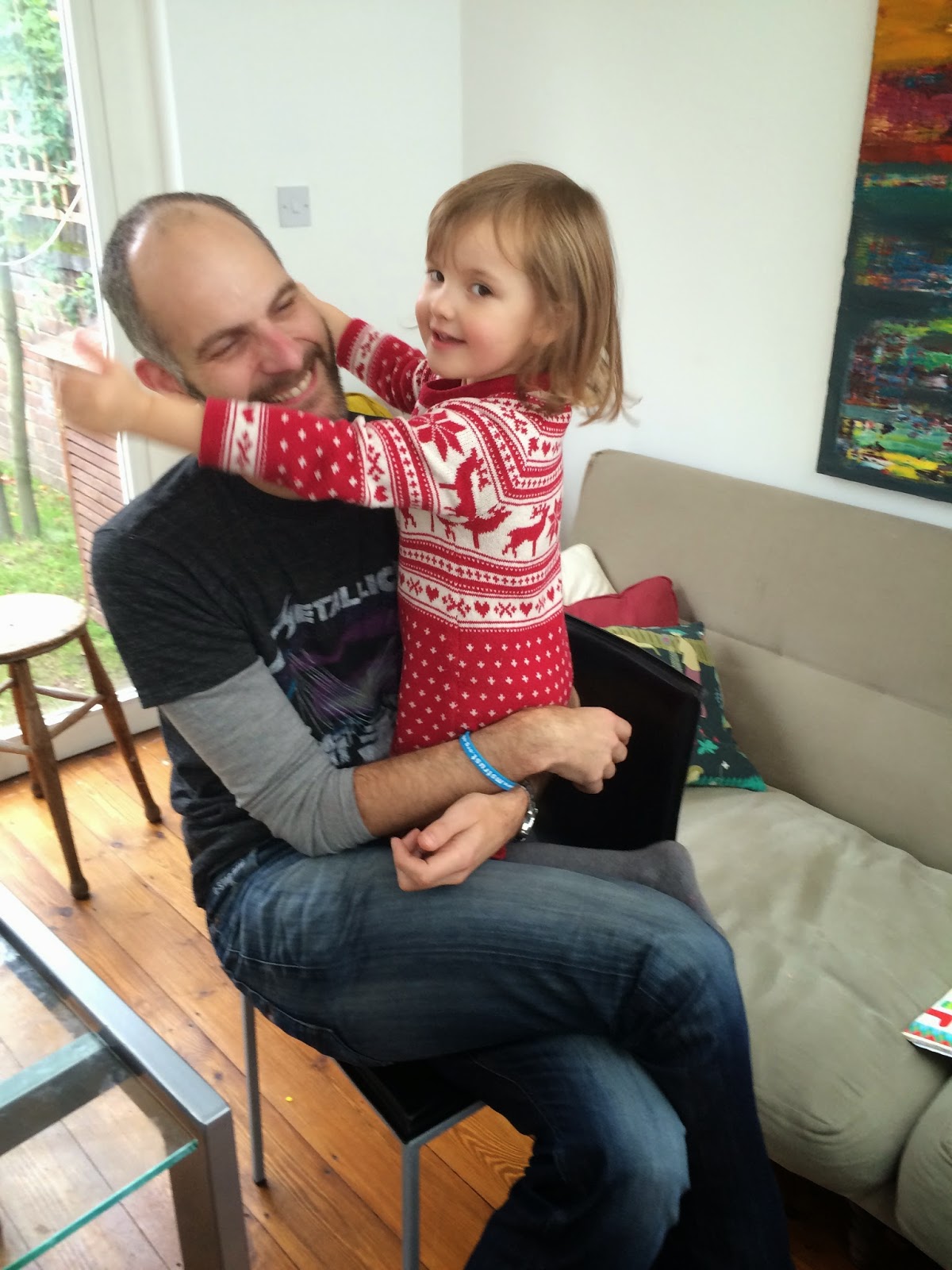
The crown jewels can wait for another day: I had an appointment to get my beard pulled by a very precocious 4 year old, and who would want to be late for that?

Monday, 18 November 2013

weer all crazee now....


Experience, though noon auctoritee
Were in this world, were right y-nough to me
To speke of wo that is in mariage;
For, lordinges, sith I twelf yeer was of age,
Thonked be God that is eterne on lyve,
Housbondes at chirche-dore I have had fyve;
For I so ofte have y-wedded be;
And alle were worthy men in hir degree.
But me was told certeyn, nat longe agon is,
That sith that Crist ne wente never but onis
To wedding in the Cane of Galilee,
That by the same ensample taughte he me
That I ne sholde wedded be but ones.

I first came across this when I was about seventeen years old and studying towards an A-Level in English Literature.  I'd studied Shakespeare already, of course, and familiar with the language..... but that sounds mostly like the English that we speak now. Middle English, on the other hand seemed like a completely different language.

I got the hang of it before long, and it really helps if you hear it read aloud (and you can hear that bit quoted above read aloud here).  You just need to get your radar tuned in, and once you have, then the whole, bawdy world of the Wife of Bath's Tale and the rest of the Canterbury Tales open up before you.

The development of the English language is fascinating.  The Canterbury Tales was first published at some point around the end of the fourteenth century.

As wikipedia says:

'The pronunciation of Chaucer's writing otherwise differs most prominently from Modern English in that his language had not undergone the Great Vowel Shift: pronouncing Chaucer's vowels as they would be pronounced today in European languages like Italian, Spanish or German generally produces pronunciations more like Chaucer's own than Modern English pronunciation would. In addition, sounds now written in English but not pronounced were still pronounced by Chaucer: the word [knight] for Chaucer was [kniçt], not [naɪt]."


The book was the first known to be printed by William Caxton at his printing press in Westminster in 1476, and it was the setting down of books like this into print that began the process of the standardisation of the English language and the smoothing out of regional variations.  By the time Shakespeare was writing in the late sixteenth and early seventeenth century, the language was much more recognisably close to the one that we speak today.  (As well as studying the Wife of Bath for A-Level, I also studied Caxton and the printing revolution as part of my History degree.... I love this sort of stuff).

With all this in mind, I was fascinated to read this article on the Guardian website today.

Apparently, a school in Halesowen is trying to stamp out the use of the local Black Country dialect.  Well, if you've every heard Noddy Holder speaking or tried to wrap your head around any Slade song lyrics, then you'll know that the dialect in question is all ‘gonna’, 'Yow am', ‘woz’ or ‘it wor me’... not for nothing are people from this neck of the woods often called Yam Yams.  What I did not know, and what this article points out, is that this dialect and these pronunciations are the closest left in modern Britain to the language as it was spoken in Chaucerian England.

As the Sedgley Manor Dictionary (linked from the article) says:

"The dialect of the Black Country area remains perhaps one of the last examples of early English still spoken today.  The word endings with 'en' are still noticeable in conversation as in 'gooen' (going), callen (calling) and the vowel 'A' is pronounced as 'O' as in sond (sand), hond (hand) and mon (man).Other pronunciations are 'winder' for window, 'fer' for far, and 'loff' for laugh - exactly as Chaucer's English was spoken".

That's fascinating, right?  It's not just me?  Right?

Just as we are rightly doing our best to keep languages like Welsh and Gaelic alive, should we not also be preserving this too?  We certainly shouldn't be trying to actively stamp it out, anyway.

Funny what you learn, innit.  Every day's a school day.

Monday, 4 November 2013

and I'm on fire....


Tomorrow is Bonfire Night.  People keep asking me if I'll be going to a bonfire party this year, and lots of my colleagues seem genuinely excited about the prospect of the charity firework and bonfire party that is taking place at my office on Friday this week (postponed from last Friday because of the Fire Brigade strike, although the pissing rain we had on the night would probably have been its own kind of safety measure...).  

The answer is no.  I don't really like fireworks.  I've seen one or two absolutely amazing displays in my life: one organised and the other not so much.  The organised display was on Cocoa Beach in Florida on Independence Day in 1999 and it was quite a sight to behold as they launched volley after volley of fireworks over the ocean.  The rather less organised display was by the people of Amsterdam on New Year's Eve in 1999, where everyone seemed hell-bent on losing their fingers by hand launching fireworks. It was astonishing to watch, and by the end of the night, we were ankle deep in red wadding paper and had to wade our way through it.  Every other display has basically been a bit shit.  Well, you've seen one, you've pretty much seen'em all, haven't you?  I really don't see the big attraction.   And who really thinks it's a good idea to suggest that I stay back at work on a Friday night so I can spend some time with other people's children, some low rent fireworks and some brown van catering? And PAY for the pleasure?  No thanks.

All this bah-humbuggery got me thinking though:  do people still chuck a guy onto their bonfire?  This was a big part of bonfire night when I was a kid, and we used to spend a bit of time at cubs or scouts making our own guy and then, in time-honoured "penny for the guy" fashion, we would take it around trying to raise a bit of money before chucking the whole lot on the bonfire and cheering when it went up in flames.  I didn't think anything much of it as a child, but isn't it a slightly weird and macabre thing to be doing?

Guy Fawkes himself was not actually burned: 

The Attorney General Sir Edward Coke told the court that each of the condemned would be drawn backwards to his death, by a horse, his head near the ground. They were to be "put to death halfway between heaven and earth as unworthy of both". Their genitals would be cut off and burnt before their eyes, and their bowels and hearts removed. They would then be decapitated, and the dismembered parts of their bodies displayed so that they might become "prey for the fowls of the air".

As it turned out, Fawkes was able to jump from the gallows and broke his neck in the fall, escaping the rather specific agonies of his sentence.  His remains, however, were still quartered and sent around the country.

Nice, huh?  As if that wasn't bad enough, we burn effigies of him and remember his treason every single year for hundreds of years after his death.  Things got worse for Catholics after the discovery of the Gunpowder Plot in 1604, and by 1613 there was a Bill introduced into the Commons to compel Catholics to wear a red hat, or coloured stockings, like a clown... so they could be recognised and hooted at in the street.  Does that remind you of anything?

So why on Earth are we still casually celebrating this hatred and religious discrimination in this day and age?  Can you imagine if we burned muslim effigies on our bonfires every year instead of Catholic ones?  You know, for kids....


We do still burn a Guy on Bonfire Night, by the way.  In the age of political correctness, that seems to be one tradition that seems to have survived.  The Guardian tells me that Edenbridge in Kent will be burning an effigy of Katie Hopkins.  Last year they burned an effigy of Lance Armstrong.  I'm assuming that being burned alive isn't very pleasant, so if burning an effigy of a long dead plotter is bad enough, what on earth are we to make of the burning of effigies of people who are still alive?  Even if that's a joke, it's in pretty poor taste.


Of course, thanks in large part to Alan Moore, Guy Fawkes is enjoying something of a global resurgence as the face of rebellion and disobedience against controlling governments.

"People shouldn't be afraid of their government. Governments should be afraid of their people".

I'm not sure it's quite what he had in mind when he was discovered loading those twenty barrels of gunpowder into the cellars beneath the Houses of Parliament, but it's probably an improvement on being remembered simply as a Catholic traitor who must symbolically pay for his crimes year after year after year.

Enjoy your fireworks.

Tuesday, 3 September 2013

rabbit, rabbit, rabbit....

As you know, I like a bit of history.

I didn't actively go out seeking history on our holiday in Dartmoor last week... well, I suppose I did a bit: visits to castles and various National Trust properties probably count as seeking out history right?  Well, anyway.  I accidentally stumbled across some history as I was browsing the little shops in the centre of Chagford.

There's a little art gallery there, and it seemed to have an unusual number of pictures and sculptures of hares.  Now, I like hares.  They're beautiful and interesting animals.  To this day, I regret that we didn't buy a lovely ceramic sculpture of a hare that we saw when we were in a cafe in Ashbourne.  I paused to have a closer look at the pictures in the gallery, and saw that there was a leaflet there too about something called "The Three Hares Trail".  It turns out that there are a number of churches - seventeen, to be precise -  around Dartmoor that all have at least one roof boss depicting an ancient symbol of three hares or rabbits running in a circle and joined by their ears to form a triangle at the centre of the design. The symbol is a puzzle for each creature appears to have two ears yet, between them, they share only three ears.  I was intrigued, and as one of the seventeen churches was in Chagford itself, I headed over to have a look.


The symbol in Chagford is on the roof directly over the altar.  The little flyer detailing the history of the church that I picked up on the way in explained that the hares or rabbits were often associated with the tin miners in the area (who bred rabbits in warrens for food) and that the three represented the Trinity.

Hmm.  The leaflet I'd picked up in the gallery had mentioned that the three hares symbol can be found all over the world and many thousands of miles apart. According to the Three Hares Project, the earliest known examples of the motif date back to the 6th Century AD and are on the ceilings of Buddhist cave temples in Dunhuang, China - an important trading post. The symbol is also associated with Buddhism, Islam and Judaism as well as Christianity.  Not to mention the fact that the hare itself is an animal with strong links to magic and to paganism and has long been associated with fertility, the moon and the female reproductive cycle.

A sign of the Trinity?  Perhaps, but it feels as though there are other meanings going on here too and that the symbol's presence in these churches does not have such a straightforward interpretation.

Later that same day, we went out to Widecombe-on-the-Moor to have a look at the church there and to go for a walk on the moor.  There's a boss of the three hares on the roof there too, again close to the altar.  Again, the literature in the church itself links this to the Tin Miners (who paid for the addition of the famous church tower) and with the Trinity.  Looking at the positioning of the boss on the ceiling here, and it is surrounded by other bosses representing images that don't seem at all Christian to me: there are several Green Men, a boss featuring Gawain (of Green Knight fame, of course), bosses of Oak, Wormwood and Myrtle.


The boss of the hares here itself is called "The Hunt of Venus"... is it just me who thinks that the whole Trinity explanation of the significance of this symbol has been added somewhat after the event?  The whole thing reeks of paganism.  Not that this is a bad thing.... surely the story of Christianity is, above almost all else, a story of the triumph of adaptability?  Where do you think the Easter Bunny comes from?  Or the Christmas Tree? Or the celebration of Christmas around Midwinter?    These links to paganism are not to be feared or explained away, surely they're to be celebrated?

We went to a family wedding in Tavistock on the Saturday, and funnily enough there was a boss with the three hares there too, only this time the creatures depicted were categorically rabbits.  I suppose they superficially look the same, but anyone who has ever seen a hare with their own eyes will know that they're unmistakably hares and not rabbits.  These were rabbits.


Still, I was intrigued by the little slice of history that I'd stumbled across.  Every day is a school day.

Especially if you're a history geek.  It's everywhere and it's brilliant.

Monday, 19 August 2013

gorgeous george....


My wife and I went for a lovely bike ride together yesterday.  Rather than dwell on the unfortunate collision that saw C. catapulted into the canal and that sent me sprawling across the towpath, both of us picking up various grazes, cuts, bruises and possible cracked ribs... rather than dwell on that, I'll tell you about something else we saw along the way.

About an hour before the incident we won't be discussing, to be exact.

We were cycling through Wilford.  Wilford is a nice enough little village just down the river Trent from Nottingham.  Well, it's a bit grand calling it a village, really.  Nowadays it's a collection of housing estates of various ages.  It's pleasant enough, and has a village green and a reasonable pub that's nice for a pint on a sunny day, although not as good with food as it used to be.

As villages now seem to do, they've got a website too (google it for yourself...if they're going to ego surf, then they can at least do a bit of work for the trackback).  It has the name of the local bobby and various local interest news stories - in this case mostly about the various traffic schemes that are taking place in the area to widen the A453 and to close Wilford Lane for the tram works.  They also have a little widget on their homepage that tracks the price of petrol against the price of oil and the cheapest local petrol station to buy it.  You know the kind of thing.  Conservative MP, conservative residents, with a small "c".  Oh, and a Facebook page... where they seem to mostly be arguing about the shoddy standards in the pub, someone's overgrown hedge and some vigilante who is spray-painting around dog poo that isn't being picked up.  Exciting times!  Good luck to them, I say.  Community is good, right?

Anyway.  I digress.  What caught our eyes as we cycled through the village green was that someone has put up a sign celebrating the birth of a new heir to the throne.  Wilford Village, it seems, were keen to share in the joy of the Duke and Duchess of Cambridge and to let the world know it.  Now, I'm not in the least bit excited by this kind of thing and don't really understand why, in this day and age, people seem so ready to accept that some people are just BORN better than others.  Still, each to their own.  What I can't abide though is the inaccuracy.  Unless that sign has been there since 14th November 1948, then surely the heir to the throne hasn't been born, has he?  I'm not a fan of the family, so perhaps I'm a little rusty on how this all works, but wasn't the new royal born a few weeks back third in line to the throne?  Charles then William then this one?  Surely any royalist interested enough to put up a sign would know that much, at least?  An heir, perhaps... but then again, aren't we all probably an heir to the throne of somewhere if we went far enough back in our family trees?  Hell, if Henry Tudor can be king, then you clearly don't need MUCH of a claim, do you?  Just a good army and an act of Parliament and you're in....


Or perhaps it's a statement?  An anti-Charles protest of some sort?  Now, you might not be a big fan of the current heir, but if you're going to support a hereditary monarchy, then I'm afraid you don't get to choose the order of succession.  Well, you could take the parliamentary route and chop off Charles' head, I suppose.... but think of all the lost tourism!

Other than that, you're just going to have to lump it.

Tuesday, 22 January 2013

and they drive an ice cream van....

Something that Artog said reminded me of the Reformation. Yeah. I was a medieval historian. These things happen from time to time.


Martin Luther.  Architect of the doctrine of justification by faith alone, which inadvertently caused a schism from the Catholic Church and resulted in centuries of bloodshed.  He didn't come to these radical conclusions overnight, you know: he suffered terrible spiritual agonies over where his thinking was taking him.  He didn't take this stuff lightly AT ALL, but his conscience told him that the Bible was the only source of divinely revealed knowledge, that everyone should be able to read it in their own mother-tongue and that you couldn't buy your way into heaven.  Radical stuff.  The Pope was most definitely not amused.

Compare with:


Ulrich Zwingli: came to more or less the same conclusions at more or less the same time as Luther.  Without any of the spiritual agonies.  Boy, Luther was really pissed off when he got wind of that.

Plus he served with the Swiss mercenaries in the Italian Wars, so he was presumably a bad-ass too.

As radical Reformation theological thinkers go, Zwingli is by far the coolest.

Small catchment, I agree... but still.

Thursday, 27 January 2011

agony's last edge...

I was reading in the paper at work the other day about the case of the 11 year old child accused of murdering his father's pregnant fiancee in Pennsylvania.  The murder is shocking enough, of course... but almost as shocking is that there are plans to try the child (now 13) as an adult so that he can be imprisoned for the rest of his life.  Apparently, only the US and Somalia have refused to ratify the UN Convention on the Rights of the Child, which rules out life sentences with no chance of release for crimes committed before the age of 18.  The child initially appeared in court with his hands and feet shackled.  It's a shocking murder, no question, but isn't the idea of doling out some kind of righteous retribution to a child somehow horrific too?  Isn't the way we treat our prisoners the mark of a civilised society?

It was lunchtime, so we had a little conversation about this around our desks.  Most people seemed to be appalled at the prospect that a 13 year-old child might be locked away in prison and the key thrown away; prison is for rehabilitation, right?  There was an exception to this rule:

"Prison is for punishment.  He's murdered someone.  His age isn't important.  They should throw away the key."
But he hasn't been tried yet.  Don't you believe in the concept of being innocent until proven guilty?
"No.  You're guilty until you're proven innocent."
But not everyone who is tried is guilty, are they?
"There's no smoke without fire.  If you've nothing to hide, you've nothing to fear".
What?
"In fact, they had it right in the old days: an eye for an eye.  That's what I believe.  You kill someone and you should be killed."

I was appalled, of course.  Isn't it ridiculous to be so certain that the world can be painted into blacks and whites?  rights and wrongs?  I asked him what qualified anyone to make decisions of life and death like that and to be sure that they weren't killing an innocent.  He shrugged.
"I don't know.  I'm not a judge."

And there we have it: he was prepared to completely wash his hands of the responsibility for making decisions of life and death that his opinions were advocating, but was prepared to believe that SOMEONE was qualified and he absolutely had faith that they would make no mistakes.  Easy.  Job done.  The world's a better place and we can all sleep with our doors unlocked.

He's an intelligent man, but I find it very hard to understand views like that.  They're so.... naive.  I had a flashing image of him sitting in an office alongside a railway platform, supervising people as they sorted piles of suitcases and shoes as he stamped paperwork..... unquestioning about what was happening before his eyes because he was simply carrying out his job as efficiently as he could without questioning his superiors who had told him to do it.  For the second time this week, I thought about the banality of evil: "the thesis that the great evils in history generally, and the Holocaust in particular, were not executed by fanatics or sociopaths, but rather by ordinary people who accepted the premises of their state and therefore participated with the view that their actions were normal."


Today marks the anniversary of the liberation of the Auschwitz concentration camp. The gas chambers were blown up by the SS in January 1945 in an attempt to hide the murders perpetrated there from the advancing Soviet troops. On January 17 1945, the SS command sent orders calling for the execution of all prisoners remaining in the camp, but the order was never carried out. On January 17, 1945, Nazi personnel started to evacuate the facility and nearly 60,000 prisoners were forced on a death march toward a camp in Wodzisław Śląski. Those too weak or sick to walk were left behind, and these remaining 7,500 prisoners were liberated by the 322nd Rifle Division of the Red Army on January 27, 1945.

While under Allied interrogation, Rudolf Höss, commandant of Auschwitz concentration camp from 1940 to 1943, said that Adolf Eichmann told him that two and a half million Jews had been killed in the gas chambers at Auschwitz-Birkenau and about half a million had died "naturally".  Later he wrote "I regard two and a half million far too high. Even Auschwitz had limits to its destructive possibilities".   The likely death toll is probably somewhere between one and two million people.... an astonishing and horrifying number.

I know that the Second World War is now almost beyond living memory, but I was chastened today to remember that the liberation of Auschwitz happened less than thirty years before I was born.  We like to think of Nazism as an aberration that will never happen again, but the truth is that it very well might.  An estimated 2m people died in Cambodia between 1975 and 1979 under the regime of the Khymer Rouge, and about 850,000 people were killed in the Rwandan genocides of 1994.  Maybe they didn't quite have the industrialised efficiency of the Nazis, but surely they are a salient warning: we must not be complacent, we must be vigilant and make sure it never happens again.

Monday, 1 November 2010

there's demons closing in on every side....

I don't do trick or treating.

I'm aware that it's popular in other parts of the world, but it is something that I don't much care for.  I'm not so stupid as to see this as a purely American thing that - like McDonalds - has slowly been absorbed by the rest of a jealously admiring world. Whatever many (although I'm sure not all) Americans might care to think, it's a tradition that's actually been around for centuries.

Oh sure, they've been doing it in the USA since at least the 1950s, but it's certainly not their own idea: it has its roots in the middle ages in the practice of "souling", where children would go door to door singing and saying prayers for the dead in return for soul cakes.  These cakes were supposed to represent a soul being freed from purgatory.  Even the idea of dressing up and going around people's houses at this time of year in the hopes of getting food or money isn't new, and has been around in Scotland as "guising" since the nineteenth century.  So it's not an originally American tradition and nor is it particularly pagan in origin, as lots of people assume (at the very most, it's a pagan festival that has long since been co-opted by Christianity)

The current Hallowe'en tradition of demanding money with menaces does appear to be a US import though.... a British custom that has now taken on a distinctly American flavour.  As recently as 1986, the House of Lords felt the need to debate the "recently imported trick-or-treat custom of demanding money on threat of playing a nasty trick, now being used by youths to obtain money from old people and others".  The BBC described it in 2007 as a "...not particularly welcome import, the Japanese knotweed of festivals".  Certainly, when I was growing up, there was pretty much no such thing over here.  I used to make a Guy for Bonfire Night, but trick or treating simply wasn't on my radar at all, for all that I loved Peanuts and obviously believed fervently in the Great Pumpkin.

I didn't want to have anything to do with trick or treating at all this year, and was fully prepared for an evening spent ignoring any knocks on the door.  C. is a more generous spirit, however, and she had taken the trouble to prepare for any callers by buying a packet of Hallowe'en themed cauldron sour sweets (with no added colours, flavours or preservatives, naturally).  Fine.  As long as it was understood that I wouldn't be opening the door to any of the little bastards.

The weather put the dampeners on most potential callers, I think, but we were paid a visit by one group of kids.

"TRICK OR TREAT!!"

I remained glued to the sofa, but listened with increasing amusement as C. answered the door and the lead trick or treater was offered the bag of sweets.

"Here you go"
"I can't eat them.  They're not halal...."

Ah.  A muslim trick or treater.  What a beautiful, inclusive, multicultural world we live in.

Monday, 20 September 2010

sorcerers of death's construction....


On Sunday night, I settled down in front of the tv to watch "Flags of our Fathers" a film that, together with its companion piece "Letters From Iwo Jima", I had stuck onto Sky+ nearly a year ago.  Clocking in at a little over 2 hours and centering around a bloody assault by US Marines on a Japanese Island during the Second World War, this film is not exactly in the tradition of  lightweight Sunday evening entertainment.

 "Last of the Summer Wine" this definitely is not.

What it is, though, is an unflinching portrayal of what it is to be at war and how the survivors cope with the memory of the things that they have seen and the guilt that they lived where other, maybe better people, died.

The film centres around the stories of the six men who raised the US flag above Mount Suribachi during the assault on Iwo Jima.  It was, in fact, the second flag to be raised, but this one was immortalised in an iconic photograph that was used to raise money for the war effort and seemed to show the weary American people that victory was possible with a final push.  Much of the film deals with the guilt that the survivors felt that the real heroes, who raised the first flag, were all dead.

As you might expect from a director like Clint Eastwood, this film is no whitewash affair where the glorious US army wins the war single-handed.  The war portrayed here is bloody and confusing, and we see thousands of young Americans being slaughtered as they try to gain a foothold on a barren lump of rock in the Pacific.  Although the US Government makes heroes of the three surviving flag raisers, the film makes it clear that, although many men acted with astonishing bravery and fortitude under horrific circumstances, war does not make you great.  War is horrible and bloody and wasteful.  War kills young men in a variety of unpleasant ways and forces reasonable people to act in unreasonable ways towards other human beings.

How jarring it was when this beautiful, moving film was interrupted every half an hour or so by adverts for computer games simulating war, where you could command an army and rain death and destruction upon your opponents.  Yeah!

I've played and enjoyed games like this myself, so far be it from me to climb too far onto my high horse, but as I watched the telly on Sunday evening, these adverts felt uncomfortably like they were glorifying war and belittling sacrifice in a way that Eastwood's film was not.

I looked the film up on IMDB this morning, and saw that there was a discussion about what had actually happened to Iggy, a character who disappears from a fox-hole and is found dead in a cave several days later (played in the film by Billy Elliot himself, Jamie Bell).  The film skirts around the issue, whilst making it clear that whatever happened wasn't very nice.  The film is dealing with real people and real events, however, and wikipedia isn't so coy.  I learned that when they found him:

"Both his arms were fractured," Langley [an eye-witness] said. "They just hung there there like arms on a broken doll. He had been bayoneted repeatedly. The back of his head had been smashed in."
Other eyewitness reports further indicated that Ignatowski had been tortured in the cave by the Japanese for three days, during which time they also cut out his eyes, cut off his ears, smashed in his teeth, and cut off his genitalia.

Horrible, I'm sure you'll agree.  The discussion on IMDB focused on wondering how the Japanese could commit such an atrocity, as if the Japanese alone were responsible for committing acts like that in the context of a no-holds-barred war.  Clearly I'm not defending torture, but it's odd how war warps our moral compasses so much that it's somehow acceptable for someone to be disemboweled by shrapnel, mown down by a machine gun or torched by a flame-thrower (all graphically portrayed in the film), but it's not okay to be tortured like that (not portrayed in the film).  Where is the line of what  is and is not acceptable?  The 1949 Geneva Conventions are obviously an attempt to draw that line, but how relevant is it? Are all troops briefed in it and signed up to its application as they fight to survive on the front lines of a battlefield? Surely the very concept of rules for war is ridiculous? Or is it mainly used for after-the-event prosecutions by the winners?

"Letters From Iwo Jima" apparently tells the story of the assault from the Japanese point of view, and I'm very much looking forward to watching it.  After all, young innocent men died in horrific ways on both sides of the conflict and both sides had their own dead to mourn and heroes to celebrate, and we would do well to remember it more often.

As a great songwriter once sagely noted, "We always need to hear both sides of the story".  ALL sides would have been a better way of putting it, but even Phil Collins isn't infallible.

Monday, 16 November 2009

you're gonna burn, you're gonna burn....


I noticed, about halfway round my run this evening and some nine days after Bonfire Night, that the big charity bonfire in Wilford was finally out. It was still burning when I ran past yesterday evening, and if they hadn't clearly raked it over at some point today, then I'm sure it would still have been smouldering away merrily tonight.

Nine days is quite a long time for any fire to be burning, I would say, but if you factor in the fact that it has been hooning it down pretty solidly every day since the bonfire was lit, then you'll agree that this was quite a big bloody fire. It's so big, in fact, that the organisers of the event apparently have to get a structural engineer to put it all together. It's literally the size of a large house, and this year, they had to build it twice when some of the local youth thought it might be amusing to set the pile alight a week before bonfire night.

Tsk.

That pile of ashes was still smouldering sadly as the organisers somehow managed to conjure up another massive pile of wood alongside so that the show could go on.

Not that I've given this much thought, but a bonfire of that size must burn pretty hot, right? Wouldn't that make it a really good place to get rid of a body? If you could get it into the woodpile somehow, surely it would then burn so hot that nothing would remain? And even if someone did see a man-shaped silhouette in the flames, given that it's traditional to burn effigies at this time of the year, wouldn't they just mistake it for another Guy?

Just as a point of interest and as a terrible history bore, I feel I should point out that Guy Fawkes wasn't burned at all.... he was actually sentenced to be hung, drawn and quartered, but was so weak from his torture that he never made it past the hanging bit, sensibly deciding to jump from the gallows, breaking his neck. Spoilsport.


It seems to me something of an overreaction that he is still such a reviled figure in this country some 400 years after the Gunpowder Plot.... perhaps he'd seen the register of Parliamentary expenses and they were afraid he'd publish?

Isn't it time we got over it?

If we must burn effigies of a catholic in a massive bonfire every year, might I humbly suggest we move on to Tony Blair?